
The Mobile Commerce Trap: Why Shopping from Your Phone Costs You $1,800 More Per Year

It's 11 PM. You're scrolling Instagram in bed. A targeted ad shows exactly what you've been thinking about buying. Before you even realize what's happening, your thumb has tapped through: Add to Cart → Apple Pay → Face ID. Purchase complete. Dopamine hit delivered.
The entire transaction took 8 seconds.
This is the mobile commerce trap—and it's costing you way more than you think. We're not talking a few extra bucks here and there. Research shows that people who primarily shop on mobile devices spend anywhere from $1,800 to $2,800 more per year than those using traditional shopping methods. That's rent money. That's a vacation. That's an emergency fund.
Mobile commerce now accounts for 59% of all online retail sales, and mobile shopping leads to a 30% increase in impulse purchases compared to desktop. When researchers studied people who started using mobile payments, they found those shoppers spent 9.4% more on their credit cards overall. The convenience of shopping from your phone isn't just changing where you buy—it's fundamentally rewiring how much you spend.
The Friction Removal Economy

Remember when buying something actually required effort? Like, actual physical effort? You had to leave your house. Drive to a store. Find parking (ugh). Walk the aisles. Stand in a checkout line. Physically hand over cash or a card. Watch your money leave your hands.
Here's the thing nobody talks about: each of those steps was a tiny psychological checkpoint. A moment where your brain could pump the brakes and ask, "Do I actually want this?" Those inconveniences weren't bugs in the shopping experience—they were features that protected your wallet.
Mobile commerce systematically removed every single one of them.
What Mobile Shopping Killed
- Physical movement → Now it's just a scroll
- Time investment → Now it's seconds, not hours
- Payment retrieval → Now it's saved and ready
- Transaction visibility → Now it's abstract numbers
- Decision checkpoints → Now it's one tap
The data backs this up: 79% of purchases during major retail events now happen on smartphones. 70% of impulse purchase decisions are made on mobile devices within the first hour of seeing a product. One-click checkout alone increases the number of items purchased by 36%.
Retailers didn't just make shopping easier—they systematically removed every psychological barrier that helped you make thoughtful decisions.
The One-Click Psychology
A fascinating study from Cornell looked at what happens when shoppers sign up for one-click checkout. The results? Customers increased spending by an average of 28.5%. They also visited retail sites 7% more often and bought 36% more items.
The researchers put it bluntly: "Because one-click takes so much pain away from the shopping experience, we see consumers willing to spend more time on the site and search for more items, leading to the increase in spending."
With traditional checkout, you have multiple decision points—add to cart, view cart, enter shipping, enter payment, review order, confirm. Each step is a moment to reconsider. With one-click? The decision is made before your rational brain even knows what happened.
The Pain of Paying Has Disappeared
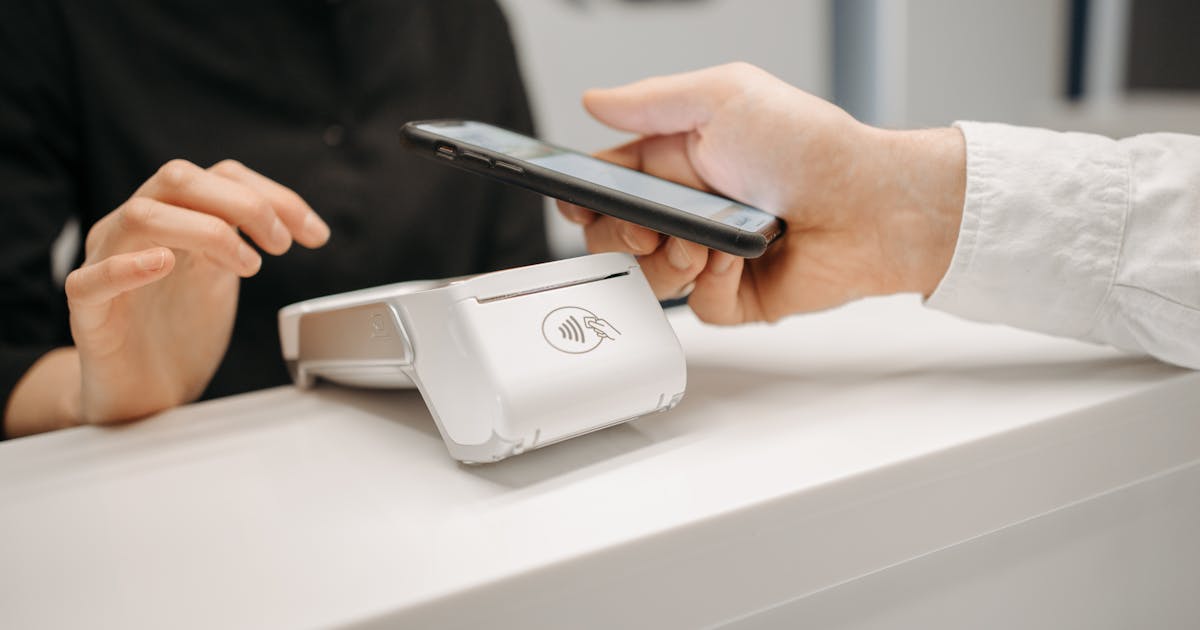
Here's a psychological concept that might change how you think about spending: the "pain of paying." It's exactly what it sounds like—the physical act of handing over cash created a little bit of psychological discomfort. And that discomfort? It was actually helpful.
Traditional cash transactions served as a tangible reminder of spending. You could see your wallet getting thinner. You could feel the money leaving your hands. That slight friction made you naturally more thoughtful about purchases.
Digital payments create psychological detachment from expenditures. A Forbes survey found that people are 52% more likely to impulse purchase when using card payments versus cash. But mobile payments take this even further.
When your phone becomes your wallet, you lose the natural awareness of how much you're spending. There's no physical emptying of your wallet, no stack of receipts, no moment of "wait, how much did I just spend?"
The Saved Payment Problem
Think about what's stored on your phone right now:
- Saved credit cards
- Apple Pay or Google Pay
- Face ID or fingerprint authentication
- Auto-filled addresses
Research found that willingness to purchase high-priced items rose to 52.59% when using a mobile payment app, compared to 44.88% when paying with cash. That's a significant difference—and it's happening unconsciously.
Even more concerning: mobile phone payments were associated with increased debt and costly credit card behaviors, like only repaying minimum balances. The features that make mobile shopping "convenient" are the exact features that make it dangerous for your financial health.
The $1,800 Calculation Explained
Let's break down where that $1,800 figure comes from, because it's not just made up.
The One-Click Effect:
- Baseline annual spending: $10,000
- One-click checkout impact: +28.5%
- Additional spending: $2,850/year
The Mobile Payment Premium:
- Baseline credit card spending: $15,000/year
- Mobile payment adoption impact: +9.4%
- Additional spending: $1,410/year
Desktop to Mobile Shift: If you shift from mixed desktop/mobile shopping ($12,000/year) to primarily mobile, you're looking at a 30% increase in impulse purchases on about 40% of your shopping—adding roughly $1,440/year in extra spending.
Even accounting for overlap between these factors, the research consistently shows mobile shopping increases spending by $1,800-$2,800 per year for the average consumer compared to more traditional shopping methods.
Who's Hit Hardest?
- Gen Z: 68% prefer shopping on mobile phones (highest vulnerability)
- Impulse buyers: Mobile amplifies existing tendencies
- Social media users: 49% of mobile commerce purchases come directly through social platforms
Reality check: Think you're immune? Check your phone's screen time for shopping apps. Then check your bank statement. The correlation might shock you.
The Micro-Moment Trap

A "micro-moment" is the seconds between seeing something and having the opportunity to buy it. In the old world, this looked like: see ad → remember it → go to store later → decide. Time for consideration: hours or days.
In the mobile world, it looks like: see ad → tap → buy → regret? Time for consideration: 8 seconds.
The Vulnerability Windows
Mobile shopping doesn't hit you equally at all times. There are specific moments when you're most vulnerable:
The numbers are stark: 77% of consumers purchase impulsively, and 70% of those make purchase decisions on mobile devices in the first hour. Your phone isn't just a shopping tool—it's a 24/7 retail environment optimized by billion-dollar companies to maximize your spending.
The Endless Scroll Economy
The UX of shopping apps isn't designed neutrally. Every element is optimized to keep you buying:
- Infinite scroll (no natural stopping point)
- Personalized recommendations (AI knows your triggers)
- "Customers also bought" (social proof)
- "Only 2 left in stock" (artificial scarcity)
- "24-hour flash sale" (time pressure)
- One-tap checkout (zero friction)
You're not fighting your own impulses—you're fighting teams of behavioral psychologists, data scientists, and UX designers whose entire job is to make you spend more.
Why Your Saved Payment Info Is Costing You Thousands
The Amazon Effect
Think about how frictionless Amazon has become. No more retrieving your wallet. No more typing in card numbers. No more entering shipping addresses. No pause between "want it" and "bought it."
23% of shoppers abandon carts if forced to create an account. But here's the flip side: that friction also prevented unnecessary purchases. Removing account creation means higher conversion (great for retailers, terrible for your budget).
The Multiple Apps Problem
Here's what makes this even worse—it's not just one app:
- Amazon: Saved
- Target app: Saved
- Walmart app: Saved
- Instacart: Saved
- DoorDash: Saved
- Every retail app on your phone: Saved
You've essentially removed the last barrier between impulse and purchase across dozens of stores simultaneously. Research shows that consumption increases and money management time decreases with saved payment apps. The easier payment becomes, the less noticeable spending becomes.
The paradox: the features that make mobile shopping "convenient" are the exact features that make it dangerous for your financial health.
The Social Commerce Multiplier
Shopping has officially moved inside your social media feeds. TikTok Shop. Instagram Shopping. Facebook Marketplace. Pinterest Buyable Pins. You don't even need to leave the app you're already scrolling—49% of mobile commerce purchases now come directly through social media.
The Algorithm Knows What You Want
Targeted advertising on mobile is scarily effective:
- Retargeting follows you across apps
- AI-driven personalization gets better every day
- "You liked this, so you'll love..." recommendations
- Products you didn't know you wanted (but now can't stop thinking about)
It's the perfect storm: emotionally engaging content (TikTok, Instagram) + personalized product recommendations + instant checkout capability. All while you're in "scroll mode"—low guard, high emotion.
FOMO in Your Pocket
Push notifications are designed to create urgency:
- "24-hour flash sale!"
- "Your cart is expiring in 1 hour"
- "Only 3 left at this price"
- "Your friends just bought this"
Social media isn't just where you discover products anymore—it's where the purchase happens, before your rational brain catches up.
Practical Strategies to Protect Your Budget

The answer isn't deleting all your shopping apps or going back to cash-only. It's adding back strategic friction that helps you make better decisions.
Strategy 1: The Screenshot Rule
Instead of buying immediately, screenshot the product and save it to a "Maybe Buy" folder. Review the folder once a week. Why it works: creates time delay, removes artificial urgency, and you'll forget about 80% of items (which means you didn't really want them).
Strategy 2: Delete Saved Payment Methods
Remove saved credit cards from your most-used shopping apps. Yes, that's inconvenient—that's exactly the point. The inconvenience is protective. Research shows that re-entering payment info gives your brain time to reconsider.
Compromise version: Remove from 2-3 apps where you overspend most.
Strategy 3: Turn Off Shopping App Notifications
Every notification is a temptation trigger. "Flash sale" alerts are designed to create FOMO. Push notifications increase purchase likelihood by 40%.
Action step: Settings → Notifications → Shopping apps → OFF. Check apps on YOUR schedule, not theirs.
Strategy 4: Set Up Purchase Boundaries
Create your own friction:
Strategy 5: The 60-Second Rule
Old habit: See it → Want it → Buy it (8 seconds)
New habit: See it → Screenshot → Analyze with BuyBye → Decide (60 seconds)
52 seconds that could save you $1,800/year.
BuyBye creates the decision checkpoint that mobile commerce intentionally removed. Screenshot the product, share to BuyBye, and get AI-powered analysis in seconds. It asks the questions your impulse brain skips: Do you actually need this? How does it fit your budget? Is this the best price? Will this purchase affect your financial goals?
Strategy 6: Weekly Mobile Spending Review
Sunday evening ritual: Open your banking app. Filter to mobile/online purchases. Review what you bought this week from your phone. Ask yourself: Which purchases added value? Which do I regret? What patterns do I notice?
Awareness is the first step to behavior change.
You're Not Weak—The System Is Rigged

Here's the truth that nobody wants to tell you: if you've ever wondered why you spend more on your phone than you planned, you're not lacking willpower—you're up against billions of dollars in behavioral psychology research, AI personalization, and UX optimization specifically designed to maximize your spending.
Amazon alone has 15,000+ employees working on conversion optimization. Every app update introduces new ways to make buying easier. A/B testing finds the exact triggers that make you spend. AI knows your vulnerabilities better than you do.
Taking Back Control
But here's the good news: awareness breaks the spell. Once you understand how mobile commerce is designed to exploit your psychology, you can design your own systems to protect yourself.
You now have:
- Understanding of friction removal
- Awareness of payment psychology
- Knowledge of micro-moment vulnerabilities
- Practical strategies to implement immediately
- BuyBye as your AI-powered checkpoint
Imagine opening your bank app and feeling calm instead of anxious. Imagine making purchases you feel good about, not ones you regret the next morning. Imagine keeping that $1,800 you would have lost to the mobile commerce trap—and using it for something that actually matters to you.
The Path Forward
The mobile commerce trap is real, but it's not inescapable. You don't need to give up the convenience of shopping from your phone—you just need to add back one crucial element: a moment of informed decision-making before you buy.
Before your next mobile purchase, screenshot it and get a second opinion from BuyBye. Our AI analyzes whether the purchase fits your budget, needs, and financial goals—giving you the 60 seconds of rational thinking that mobile commerce intentionally removed.
Your phone is powerful. Make sure it's working for your financial health, not against it.